LOCK DOWN
It was a time of agony, fear, and discomfort, yet something about it was blissful at the same time. Truly, symposiums of uncertainty and fear. In my anecdote, it was not too long since I decided to become a full-time practicing artist. I had been curating exhibitions and projects for a couple of years since graduating from university, where I majored in sculpture and glassblowing. I didn’t immediately jump into practicing art because I was broke. Sculpture was simply too expensive to maintain, I could barely afford my existence. While drawing and painting would have been more feasible, they didn’t interest me. I was specific about having a unique style in my art, and I truly didn’t know what I would do if I had to embark on two-dimensional art. Over time, working with the artists involved in exhibitions, awards, and projects left a void in my heart and, admittedly, a sense of jealousy. I felt like I was helping others grow while my career remained stagnant. Knowing I had the potential to be an even greater artist than some of the ones I worked with, artists who were thriving, hit home even harder. In 2019, I transitioned into being a full-time practicing artist.
At first, everything seemed to be going well. My works were selling fairly consistently through exhibitions I initiated and participated in. I also received a few commissions here and there. Financially, it might not have been much, but the fact that I was making sales gave me confidence. Not only in my artmaking but in myself. It symbolized that I had chosen the right path. My journey has been exciting thus far. Then the pandemic hit. On the 23rd of March 2020, the president announced South Africa’s first 21-day national lockdown, implemented from the 27th of March. I always argue that the lockdown began much earlier for visual artists in South Africa. Many art institutions and organizations are interlinked internationally, and because the pandemic was severe in other nations already under lockdown, it greatly affected what was happening on our side. Exhibitions and projects were postponed indefinitely. At that point, I wasn’t surprised or panicked when the national lockdown was announced; I felt I had been slowly prepared for it. There’s a saying: one never fully comprehends a situation until it gets personal or hits close to home.
The gravity of the pandemic hadn’t seeped in yet. For one, I wasn’t fearful for my life or particularly sympathetic to those who were dying. The rising alarms of the virus, the exaggerated marketing, and the constant debates made people seem like statistics. We got so lost in what the pandemic meant for the economy that we forgot the human lives lost. I witnessed it but didn’t feel it. My mind, heart, and soul were in financial survival mode. I didn’t care much about who got the virus as long as it didn’t come my way or rather, I was confident it wouldn’t come my way. At that point, I was relying on a commission and two sales I had secured. My clients were quiet, and I thought to myself, *Calm down and relax. Everything will pick up once the 21 days of lockdown are over. I had a small amount of money left and figured I could survive on groceries for the period. In hindsight, I’m not sure if I was naïve or in denial. But then the lockdown was extended. That was the beginning of the end for me. It felt like I had entered an era of nothingness and fear. The opportunities I had been banking on were canceled. My bank account was empty, rent was overdue, and groceries had run out. I realized we consume so much more food when everyone is isolated in one space. The comforts of socializing and outdoor activities were gone. As an introvert, I already had a small circle of friends and family, and I preferred being alone. But being isolated with no choice in the matter had a different impact on my mental state. The sense of nothingness brought doubt and uncertainty. I questioned my career choice, my self-worth, and my entire existence. The answers I came up with weren’t encouraging. I began falling into deep pits of negativity.
When the South African government announced relief funds and safety measures to help businesses, entrepreneurs, and workers survive the lockdown, it became clear that visual art was not prioritized. This caused a huge disturbance in our industry. Many of us knew that visual art wasn’t taken seriously by the government, but to be treated as though we didn’t exist angered every artist I knew. One of my clients even canceled purchasing an artwork, saying, “Art is a luxury.” The situation forced me to rethink my approach. I realized that as artists, we romanticize the notion of artmaking and allow others to undervalue our profession. Art is a business and a brand. Being an artist is like being your employer and employee simultaneously. You are a company of one. I reflected on why many of us aren’t registered entities, which excluded us from relief funds. This realization dragged me out of negativity. I needed to stop pointing blame, stop swimming in doubt, and focus on how to move forward. I asked myself: Why had it taken me so long to value my profession as a business? Why was I lost in the romantic ideologies of art?
I realized my way of thinking at university significantly impacted my career. Back then, I saw myself as a student studying to *become* an artist, rather than an artist acquiring new knowledge to hone my craft. This simple mindset makes all the difference. The moment you decide to follow the path of being an artist, you already are one. It’s about becoming better, not becoming something else. This mindset shift is vital for young artists transitioning from school into the art industry. Artists must strike a balance between creativity and business management. Romanticizing artmaking leads to exploitation, particularly for artists of color. We must understand the basics of business and branding to engage with galleries and institutions as partners—not subordinates. By working as individuals and not entities, we risk losing ownership and direction of our work. This change in perception wasn’t easy. During the lockdown, I trained my mind to channel positivity and focus on solutions. I registered as a private business, set up proper documentation, and started treating my art as a professional enterprise. I stopped wishing and started believing, affirming what I wanted every day. Slowly, those affirmations began manifesting in my life.
Through this experience, I found a new confidence, pride, joy, and direction. Yet, with these revelations came new fears: fear of losing what I’ve gained, fear for loved ones, and fear for the future. This new norm is a rollercoaster, and genuine connections are crucial to survive the ride. Be creative. Stand your ground. Know your self-worth and wealth.
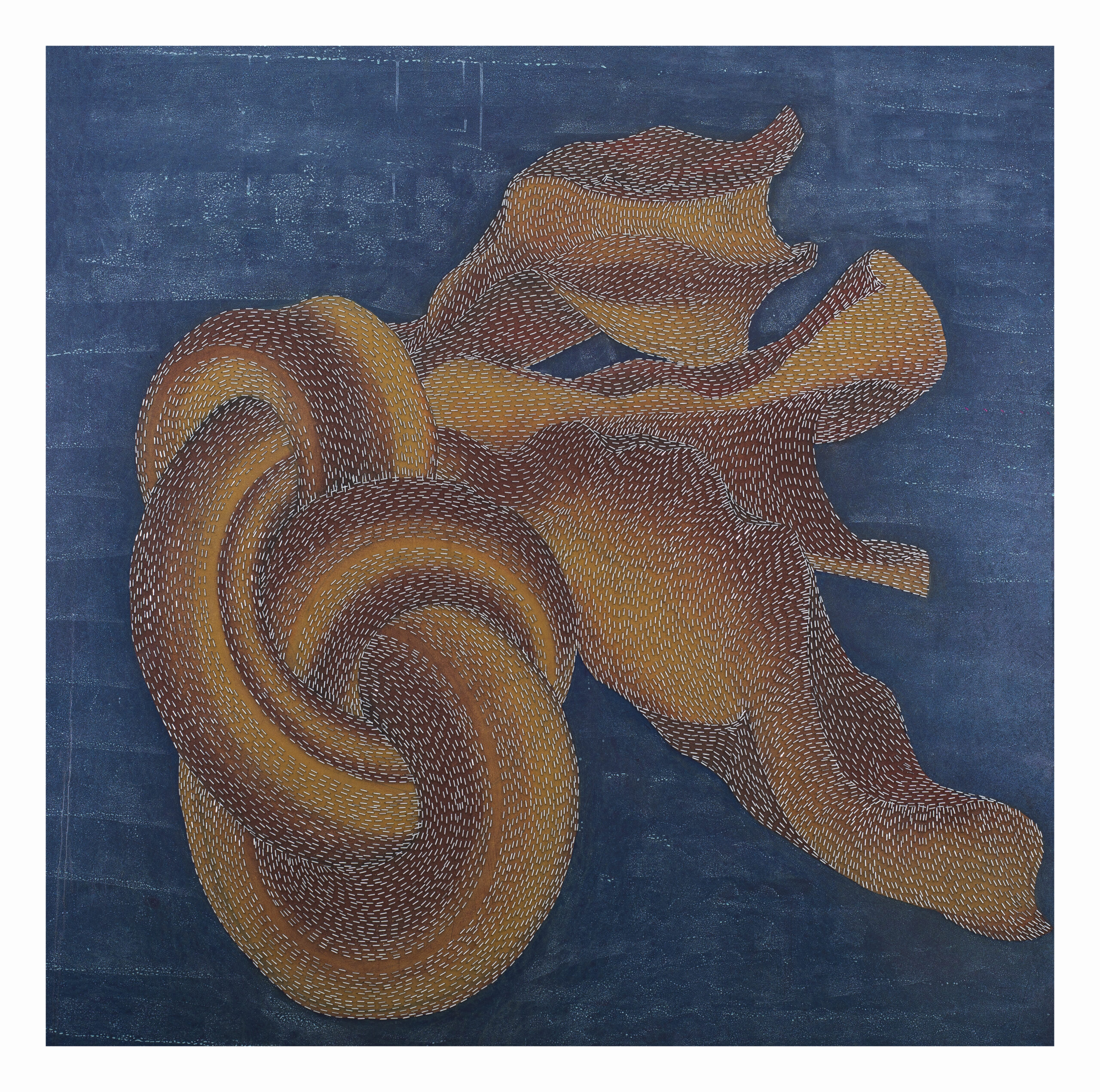
The brightest colours fill my head II
Pastel, Ink, Arylic and staples on board
2020
150 x 150 cm
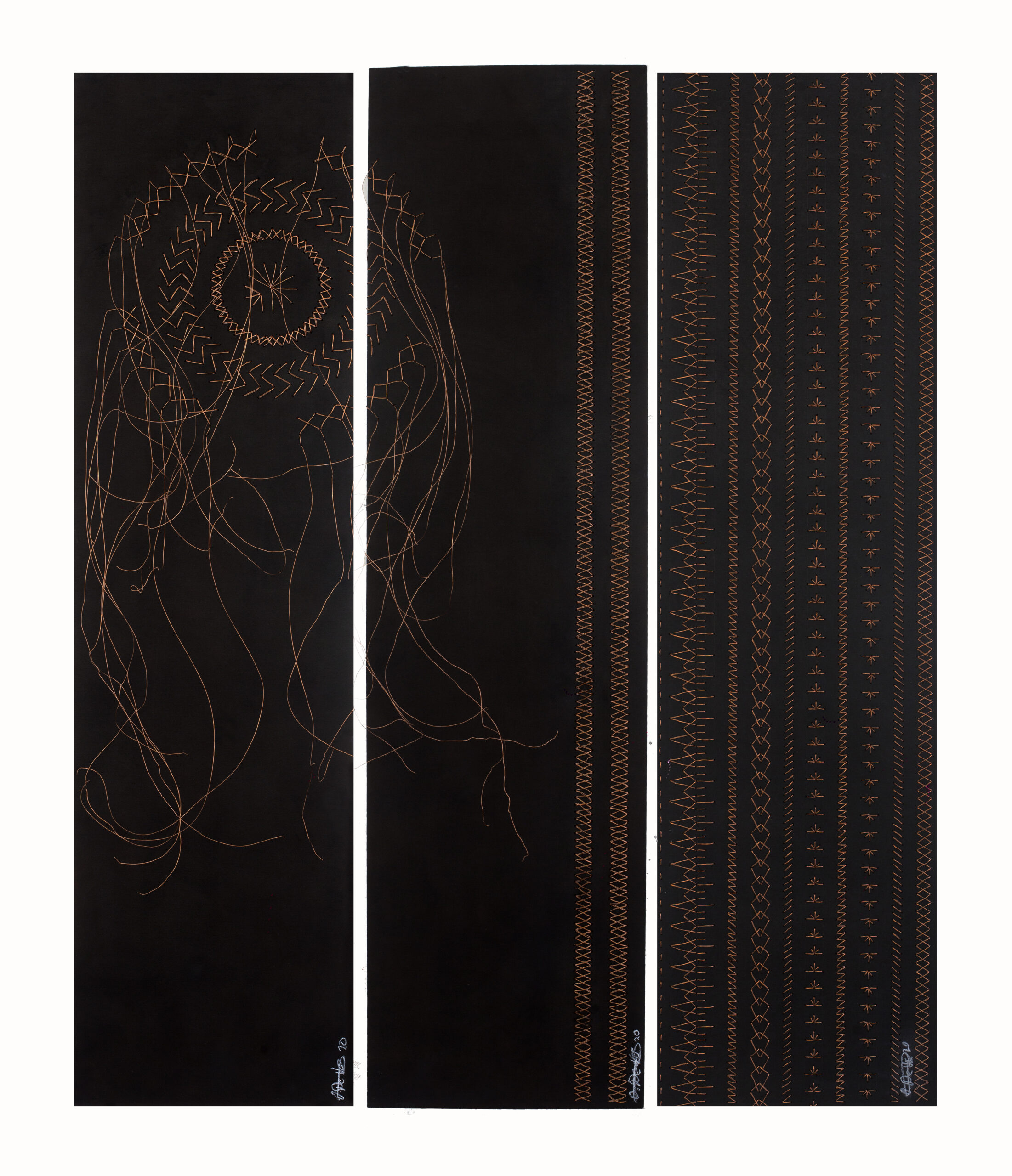
Sunrise, Sunset. (Tryptech)
Blow torch, charcoal and copper on board
2020
3 [ 40 x 150 ] cm
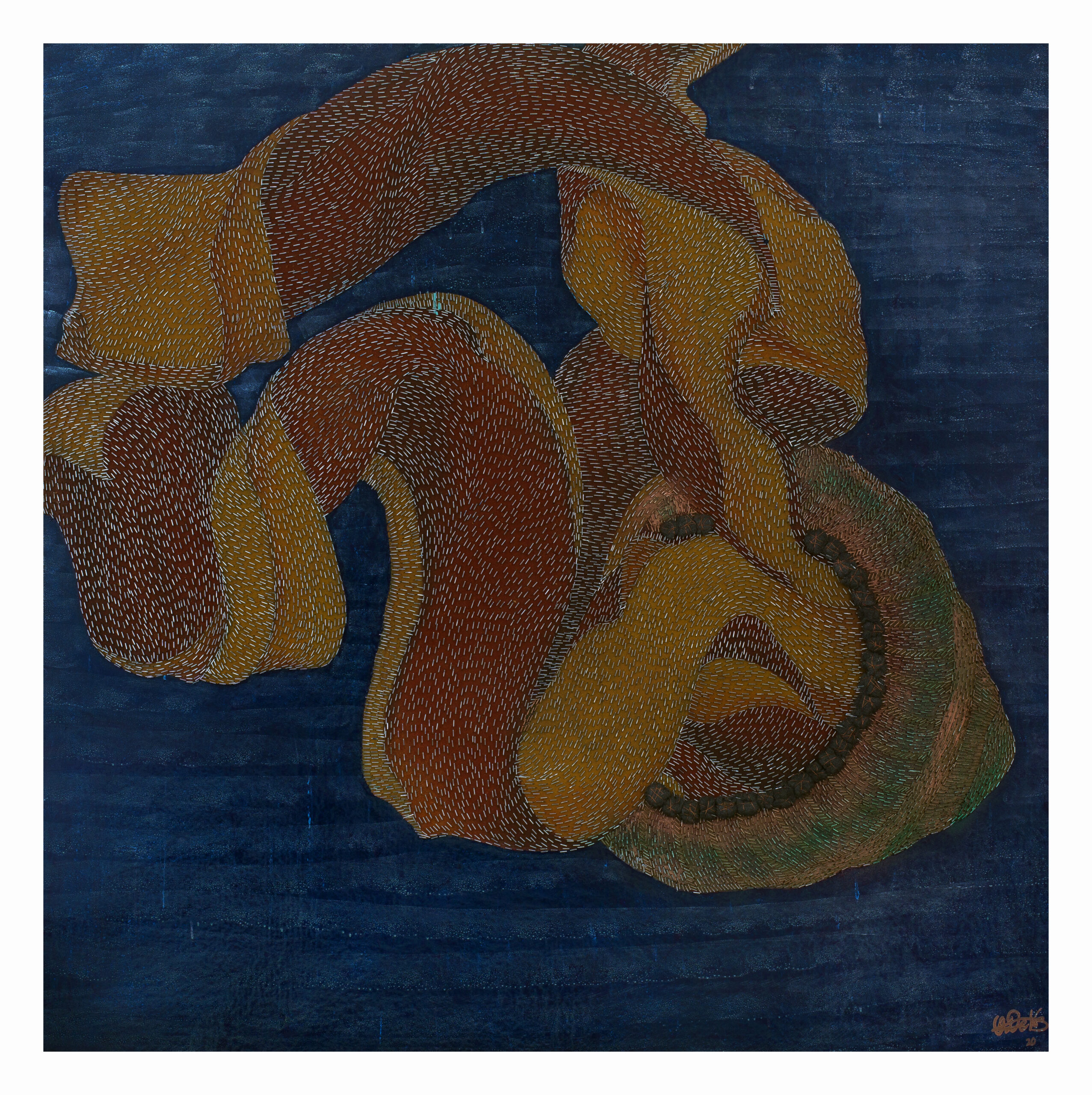
The brightest colours fill my head I
Pastel, Ink, Arylic, staples, copper and steel wool on board
2020
150 x 150 cm