WHEN THERE ARE NO WORDS
“When there are no words” is a solo exhibition presented by curator and artist Olwethu De Vos. Through the exhibition De Vos contemplates a momentary loss of words and proposes art as a profound form of expression and communication. Existence often hands us varied encounters at distinct times of our lives, and time frequently presents us with flashes that tend to render us speechless. Taking countless forms, the moments are sometimes poignant and painful experiences that may overwhelm us, moments of immense joy, or moments of boundless beauty, and at other occasions, silence is found in the most mundane of experiences.
MIRROR, MIRROR ON THE WALL WHO’S THE FAIRSEST OF THEM ALL : A PRELUDE TO THE WORKS OF OLWETHU DE VOS.
“Mirror, Mirror on the wall, who is the fairest of them all?” A question most are aware of in part to the popularized tales of the grim brothers. A question many asks themselves when no one is watching; “Mirror, mirror on the wall, who is the fairest of them all?” And what shall the answer be; you? Yes, you are the fairest of them all! Now another question...Who amongst us is the bravest of them all? Courageous enough to show their entirety for all to see, is it you? Are you the bravest of them all? When there are no words is a body of work by Olwethu De Vos that confronts and questions if we are indeed courageous enough to be seen in our entirety by the world. De Vos, through this body of work positions herself as an investigator, as she amplifies that part of ourselves that questions if we are indeed the fairest of them all. Characterized as a brave endeavor,
De Vos forces us to interrogate our biological, anatomical, physiological as well as psychological selves to determine if we are indeed in line with the centered model (the perfect) while cross-examining our malleability to the model representations of beauty. Body politics are often embedded in varied epistemologies, but the ones that govern most are split between postcolonial (man) and feminist (woman) theories of relativity. However, De Vos abandons the binary categories and attempts at viewing the body from a more universal lens, inclusive of the previously marginalized LGBTQ²+ as well as othered identities and lived experiences that are often disregarded. Existent in life are specifically determining factors on both the polarities of gender that serve as model representations of femininity and masculinity. The ideal model representation of a woman is often one who has a limited waist size that is directly unproportionate to the size of her glutes as well as her breasts. While the ideal model representation of man is one who swings a large phallus and has a tight six-packed stomach. Through the ingenious placement of staples in the artworks such as “Snatch, Snack, Catch”, “Margarita on a Tuesday”, and “The neighbor's window”,
De Vos not only calls attention to these notions of the ideal and the model but also question the role society and culture play in the institutionalization of these conceptions. With the staples placed in such a manner as to suggest a ruler, an apparatus of measurement, the artworks further highlight the marginalization, displacement as well as emotional and psychological trauma the embeds those who find themselves on the opposite side of the ideal. Olwethu captures men and women in different poses, some in movement, some vulnerable, some still, and some in a pose of pride. She looks at those determining parts of our bodies that we are always interrogating and plays around with the ideal body image, as seen in works such as "The ideal bun". She further delves deeper into the semiotics of our sexual organs (if they could be referred to as that) and creates elaborate three dimensional abstracts which question the role that tradition and culture play within the male and female bodies. Through the series, De Vos highlights parts of our bodies that society has trained us to hide such as the vagina and penis, breasts, pubic hair, and nipples. De Vos plays around with this iconography in vibrant colors and varied textures, layering different shapes on top of each other and creating dynamic works of art.
Using industrial materials such as blow torch, industrial staples, and copper wire, De Vos also mediates on how some of these materials can work as conductors of electricity, intrinsically looking at our bodies as conductors of sexual energy and activity and the "sparks that fly" when two people are sexually attracted to one another. De Vos's body of work not only brings to the forefront, conversations regarding our bodies but also leads us to an apotheosis where we question ourselves physically and view ourselves as objects of consumption and subjects of inquiry. She questions how we see ourselves in this world, and how we are affected by each other, our similarities and differences, and how some ideals govern how we relate to ourselves and each other.
So... what do you do when you find yourself on the opposite side of the model and the ideal, when you are not the fairest of them all; when your brave leap into self-actualization yields unpleasurable results. When the leading semiotics of beauty, sexiness, and desirability leave you at the periphery of the norm. What do you do then? It is in this moment, of despair, the moments that most find themselves in, moments that may lead to depression, anorexia, bulimia, insomnia, and a list of so many other eventualities. In this moment of silence, of deep contemplation, when there are no words when one is on their knees, De Vos shines a soft light on humanity as it is, and brings in a soft fabric that encapsulates all thoughts. Characterized by its vibrancy, the scarf flows beyond one frame and starts a new movement, It permeates and creates a safe space, in “Love in life and death” connecting all polarities, woman, man, female, male, he, she, them and brings all of them together. And as you sit in silence, you realize that you are enough and once this is done, De Vos states a powerful affirmation, “Am I afraid? Yes, Will it stop me, No”
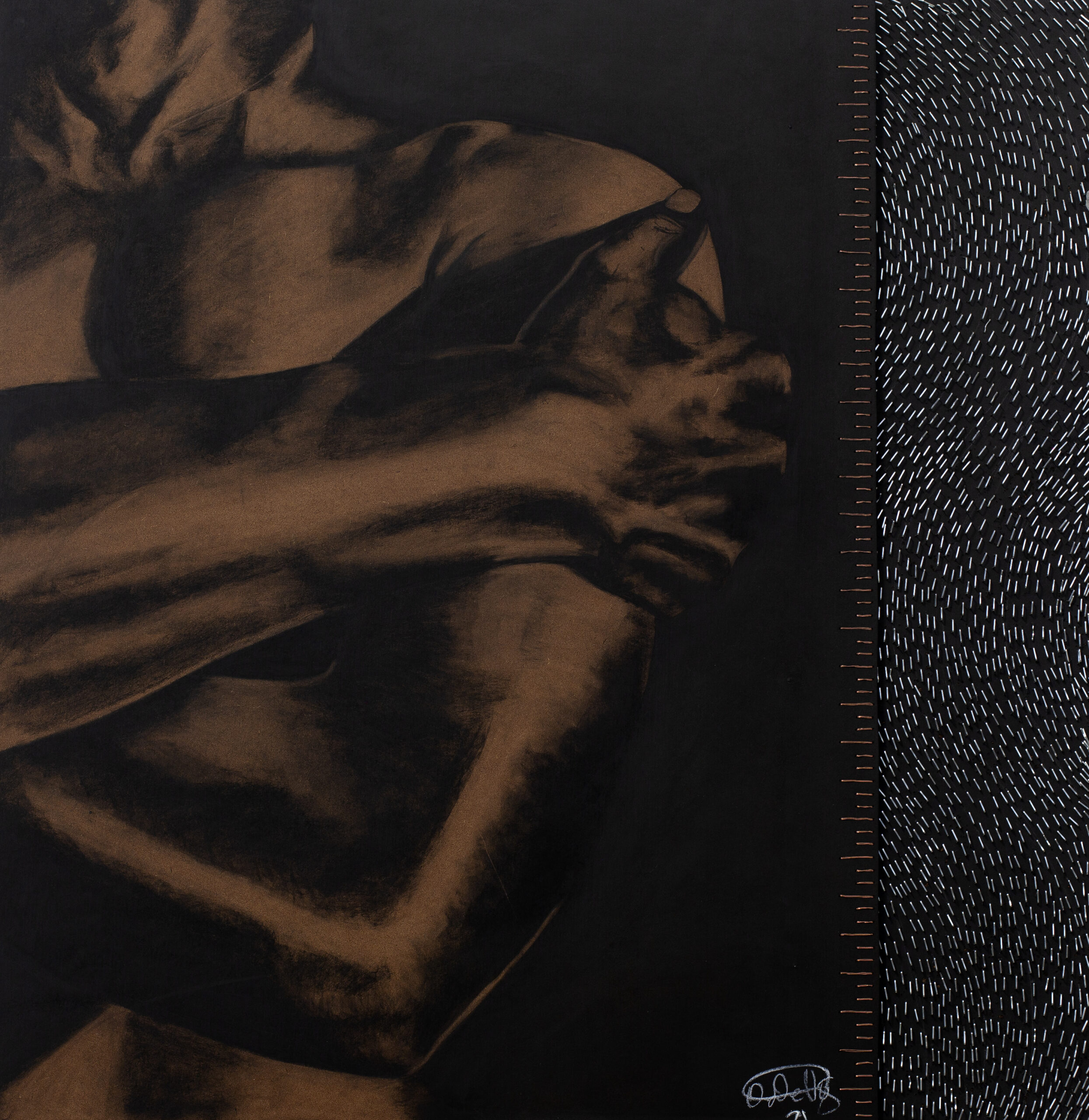
Embrace
Pastel, charcoal, staples, copper and blowtorch on board
2021
88 x 90 cm
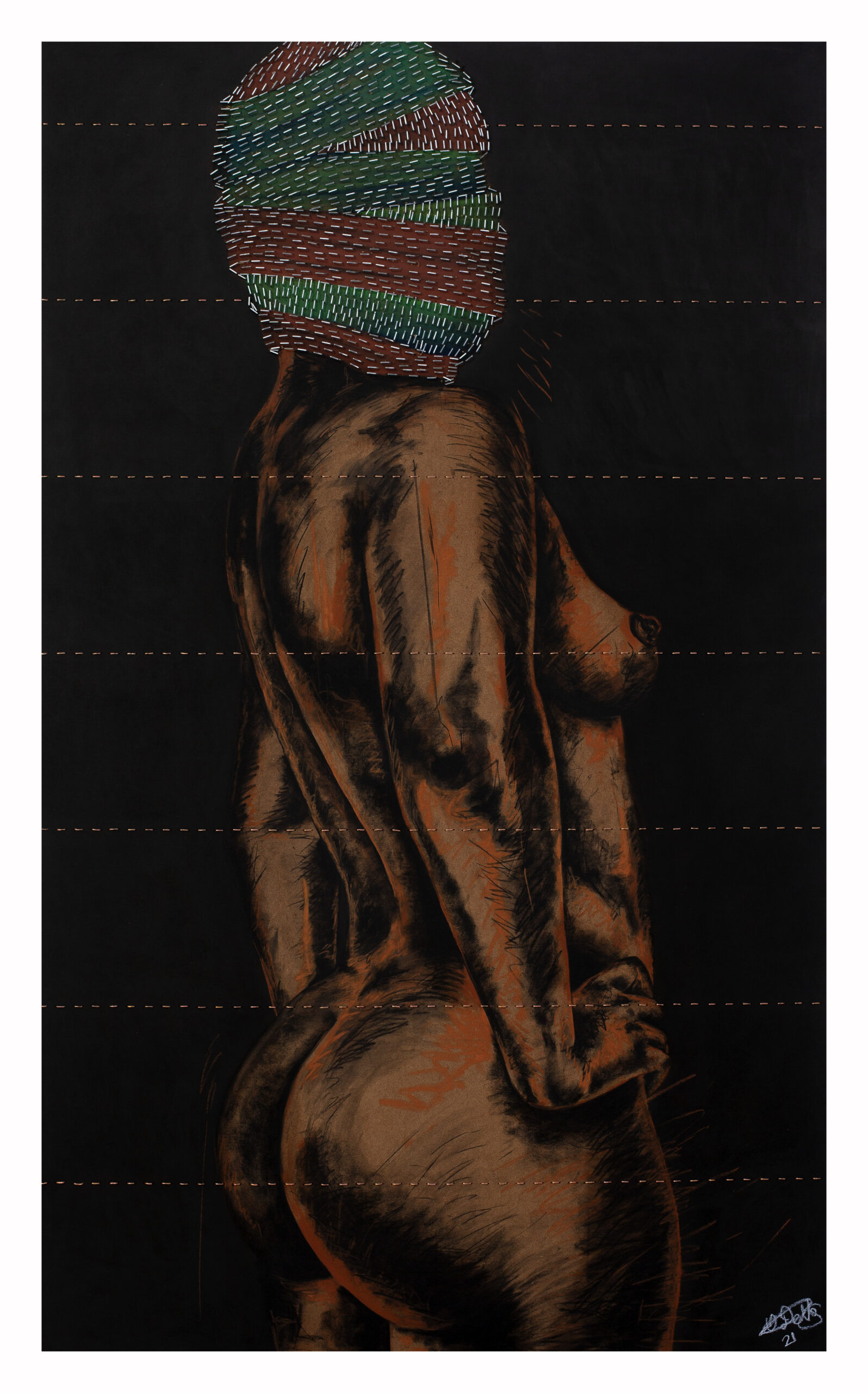
Mirror Mirror on the wall, who’s the fairest of them all?
Pastel, charcoal, staples, copper and blowtorch on board
2021
90 x 150 cm
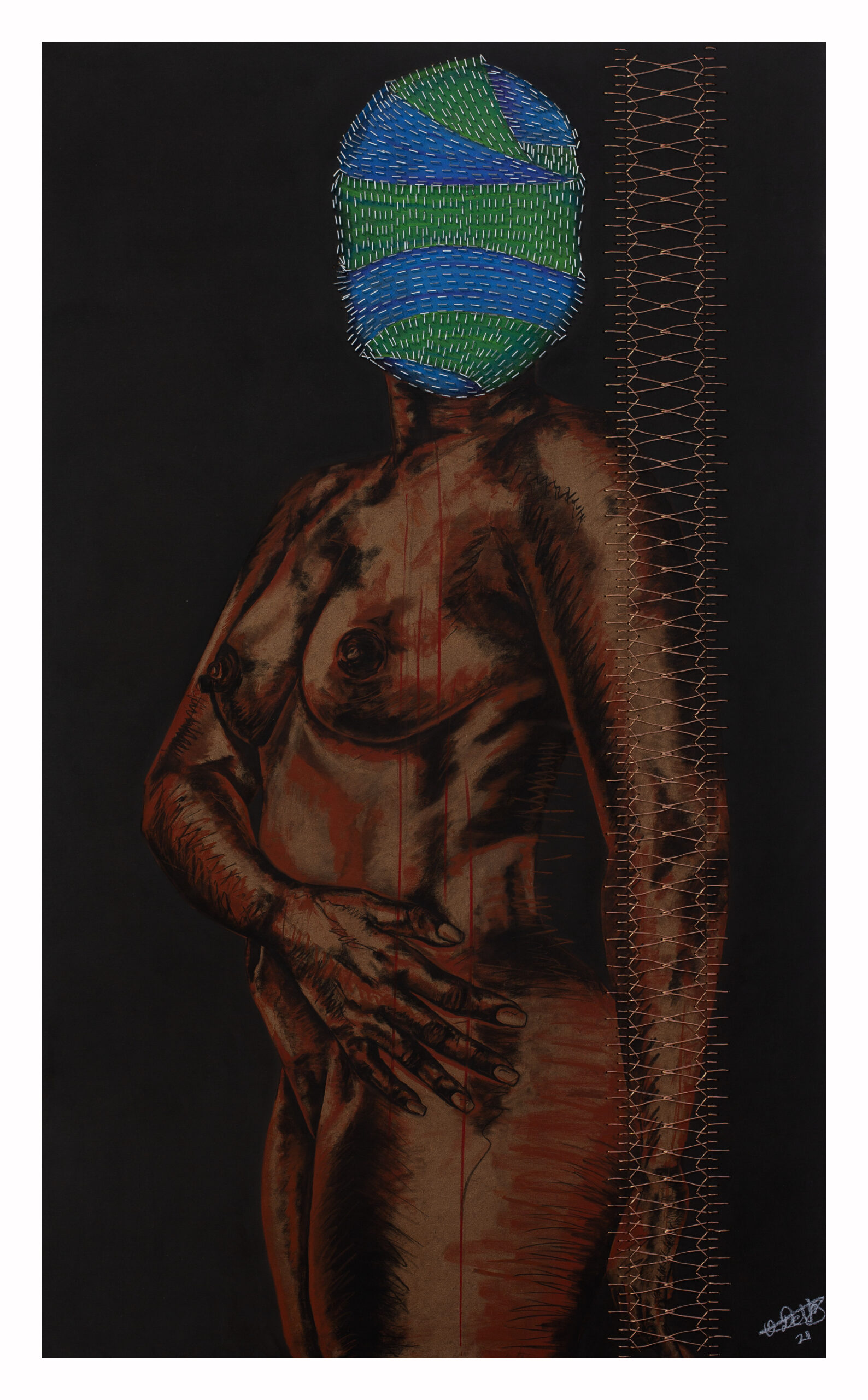
Am I afraid? Yes. Will it stop me? No
Pastel, charcoal, staples, copper and blowtorch on board
2021
90 x 150 cm
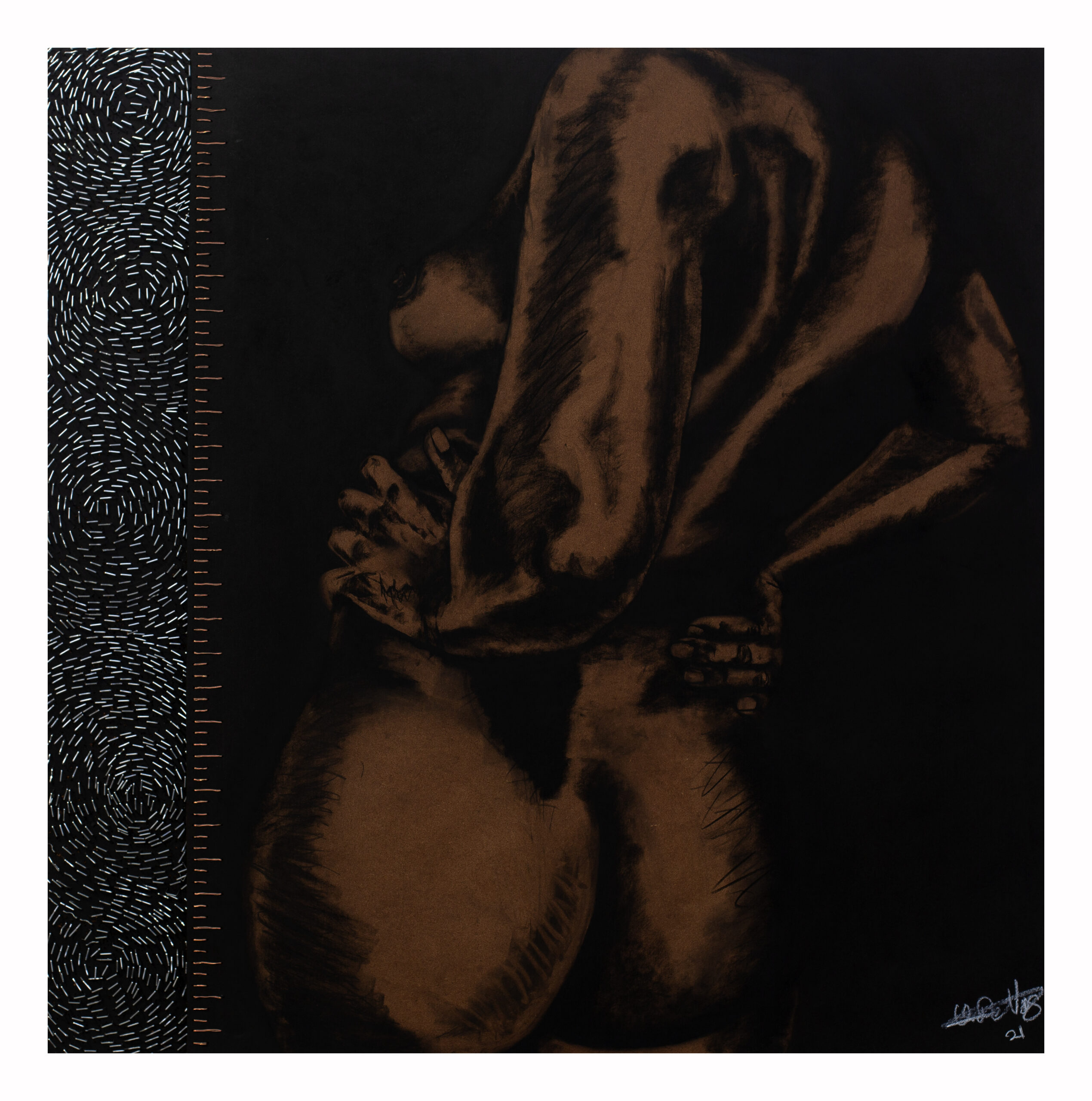
Margarita on a Tuesday
Pastel, charcoal, staples, copper and blowtorch on board
2021
90 x 95 cm
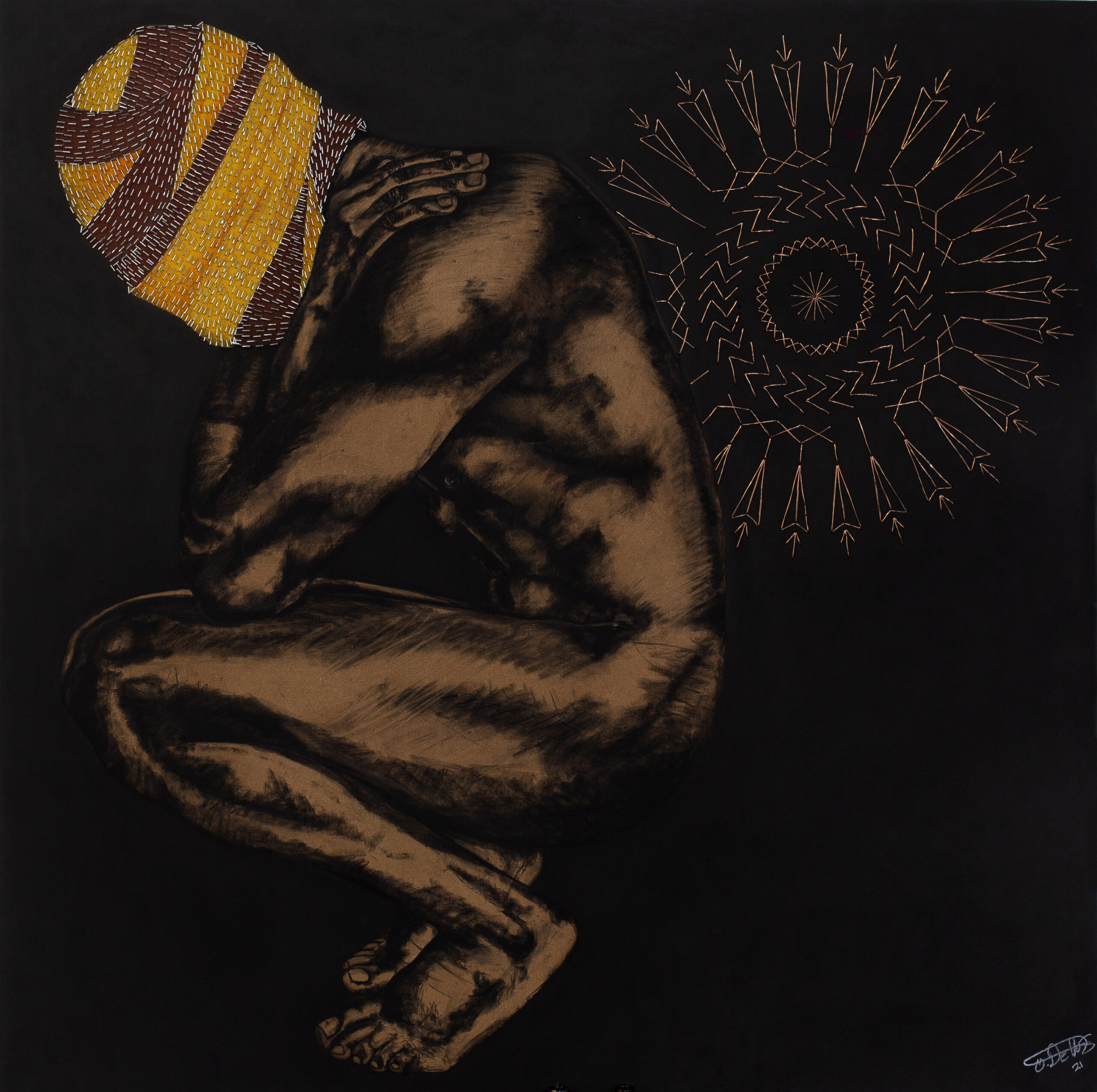
When There are No Words I
Pastel, charcoal, staples, copper and blowtorch on board
2021
150 x 150 cm
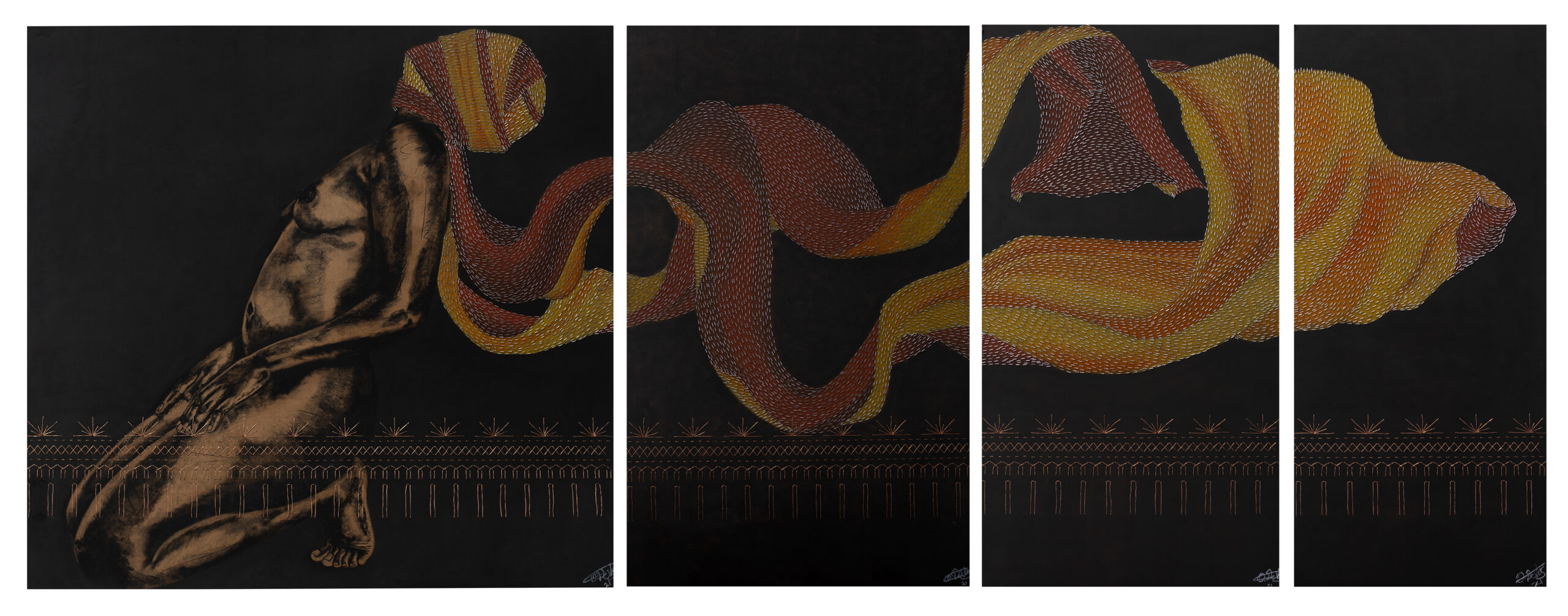
When there are no words II (Quadriptych)
Pastel, charcoal, staples, copper and blowtorch on board
2021
150 x 150; 90 x 150; 74 x 150; 60 x 150 cm
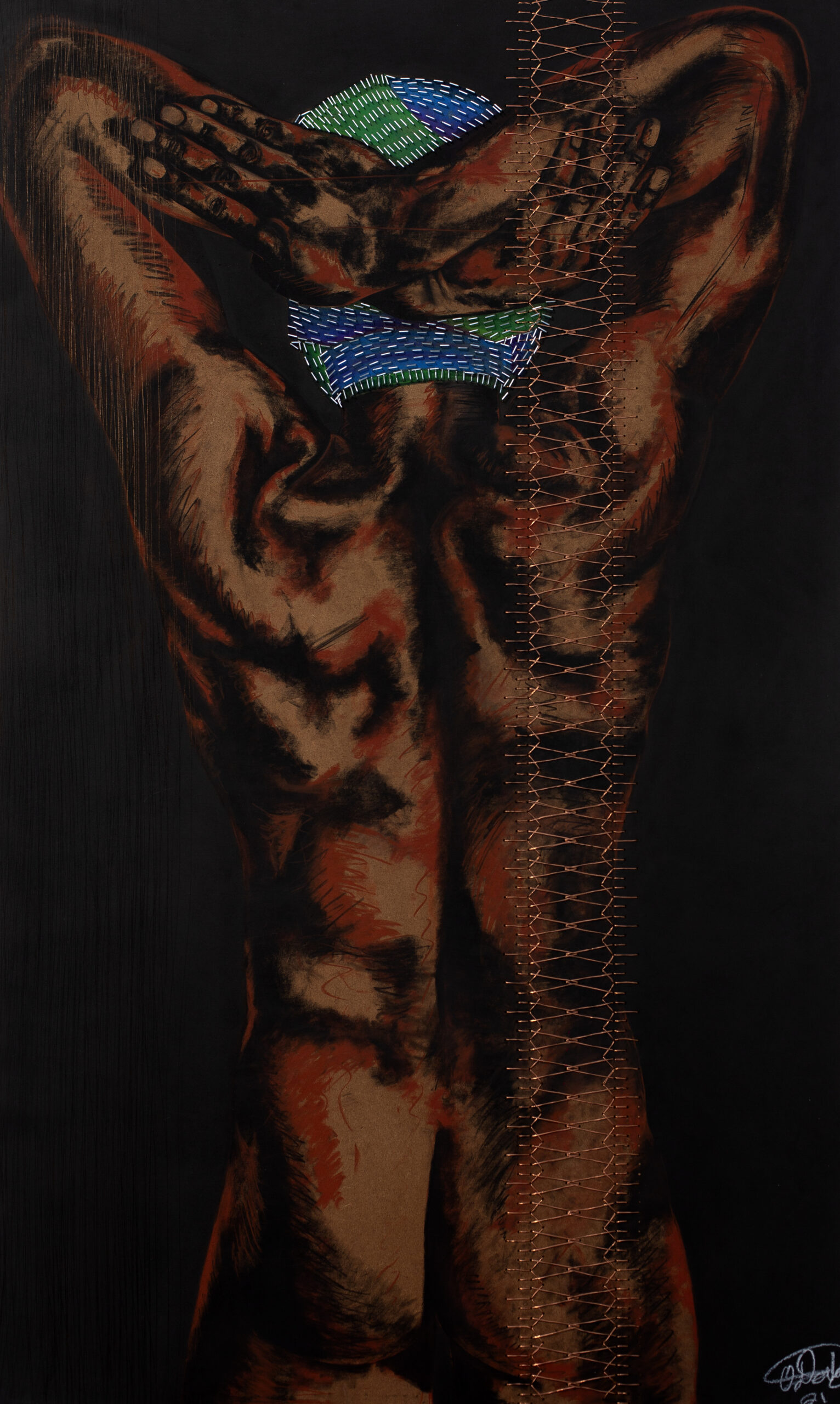
The ideal bun
Pastel, charcoal, staples, copper and blowtorch on board
2021
90 x 150 cm
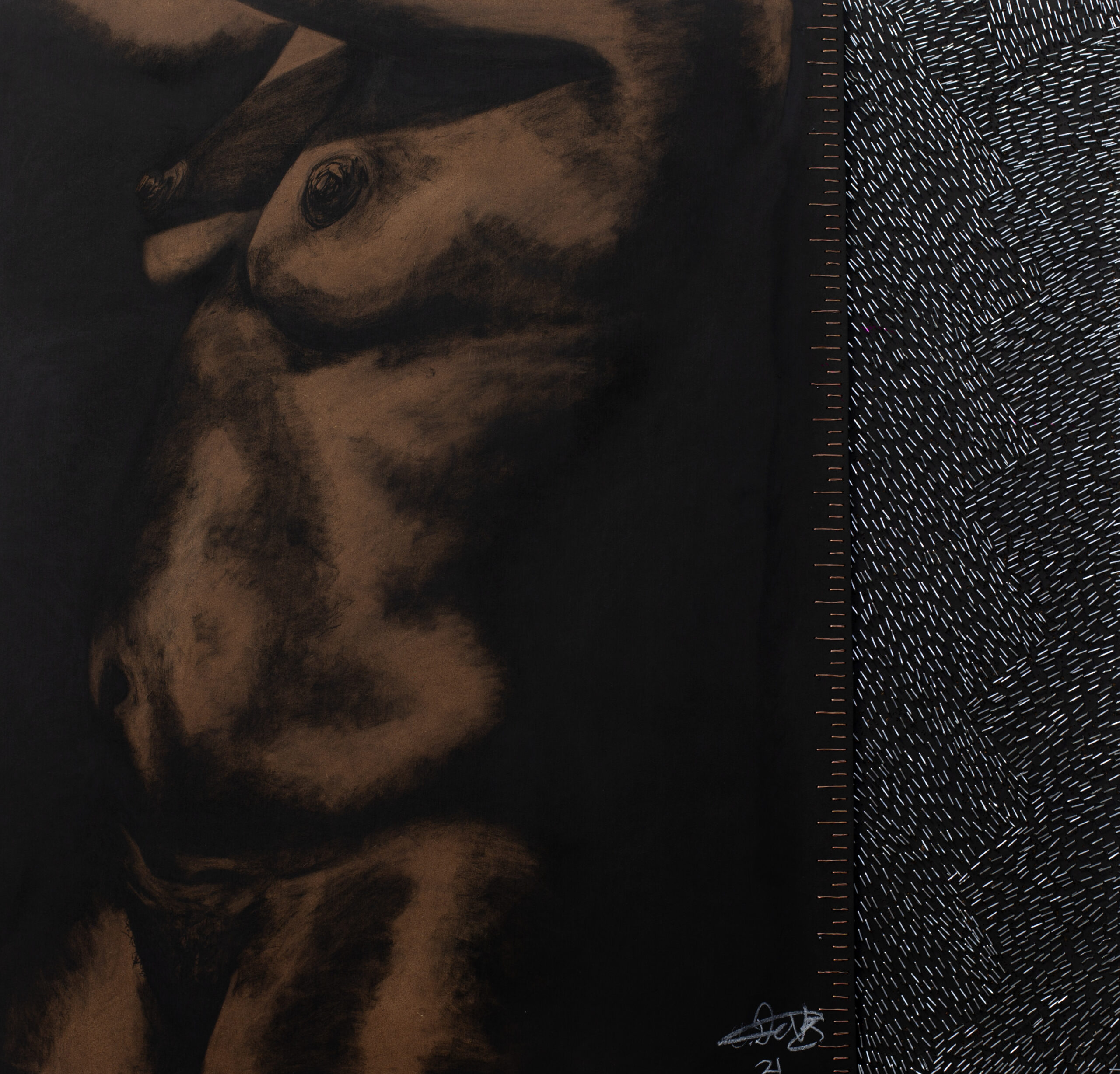
The neighbours window
Pastel, charcoal, staples, copper and blowtorch on board
2021
90 x 88 cm
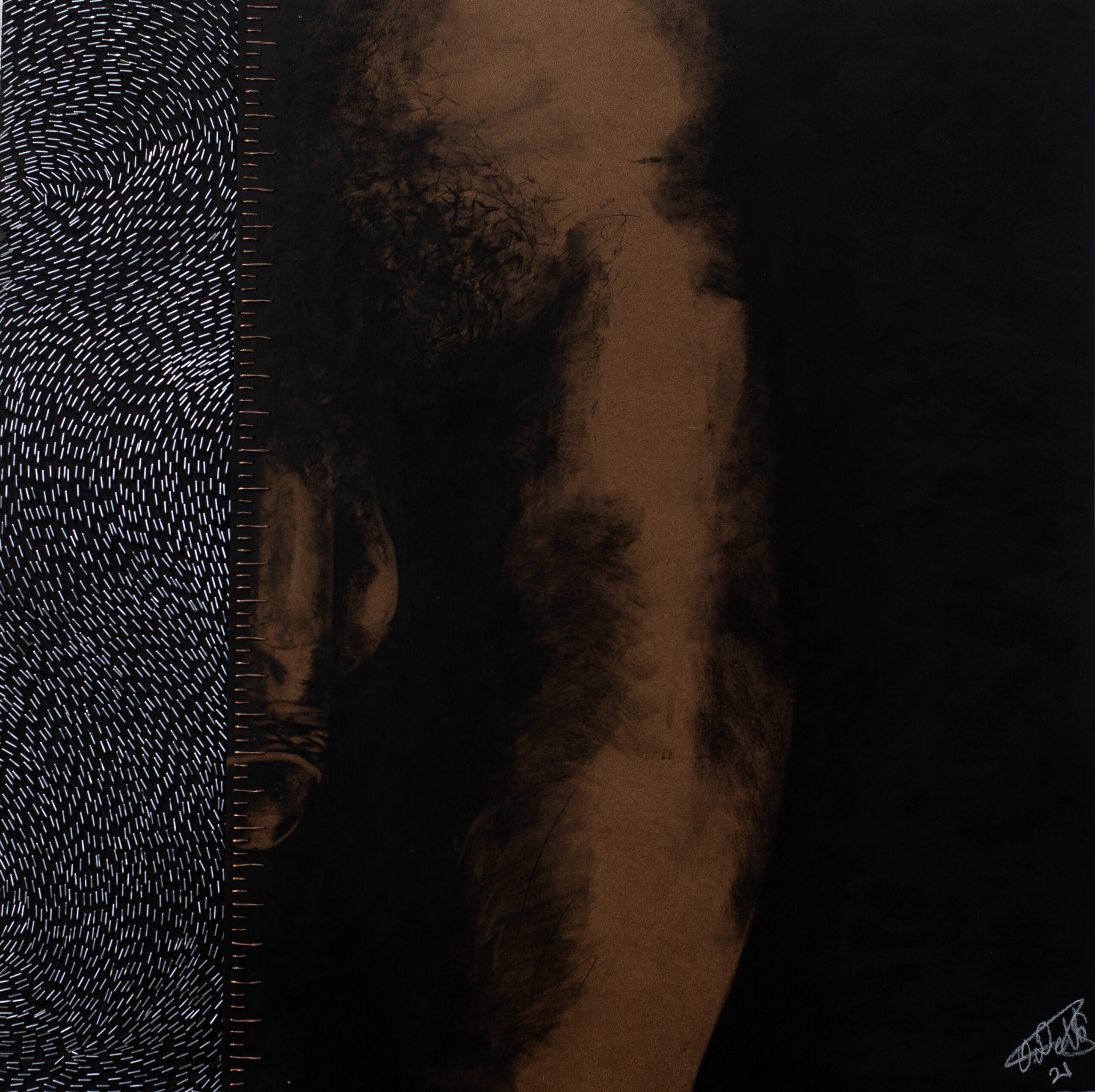
Snatch, Snack, Catch
Pastel, charcoal, staples, copper and blowtorch on board
2021
90 x 94 cm
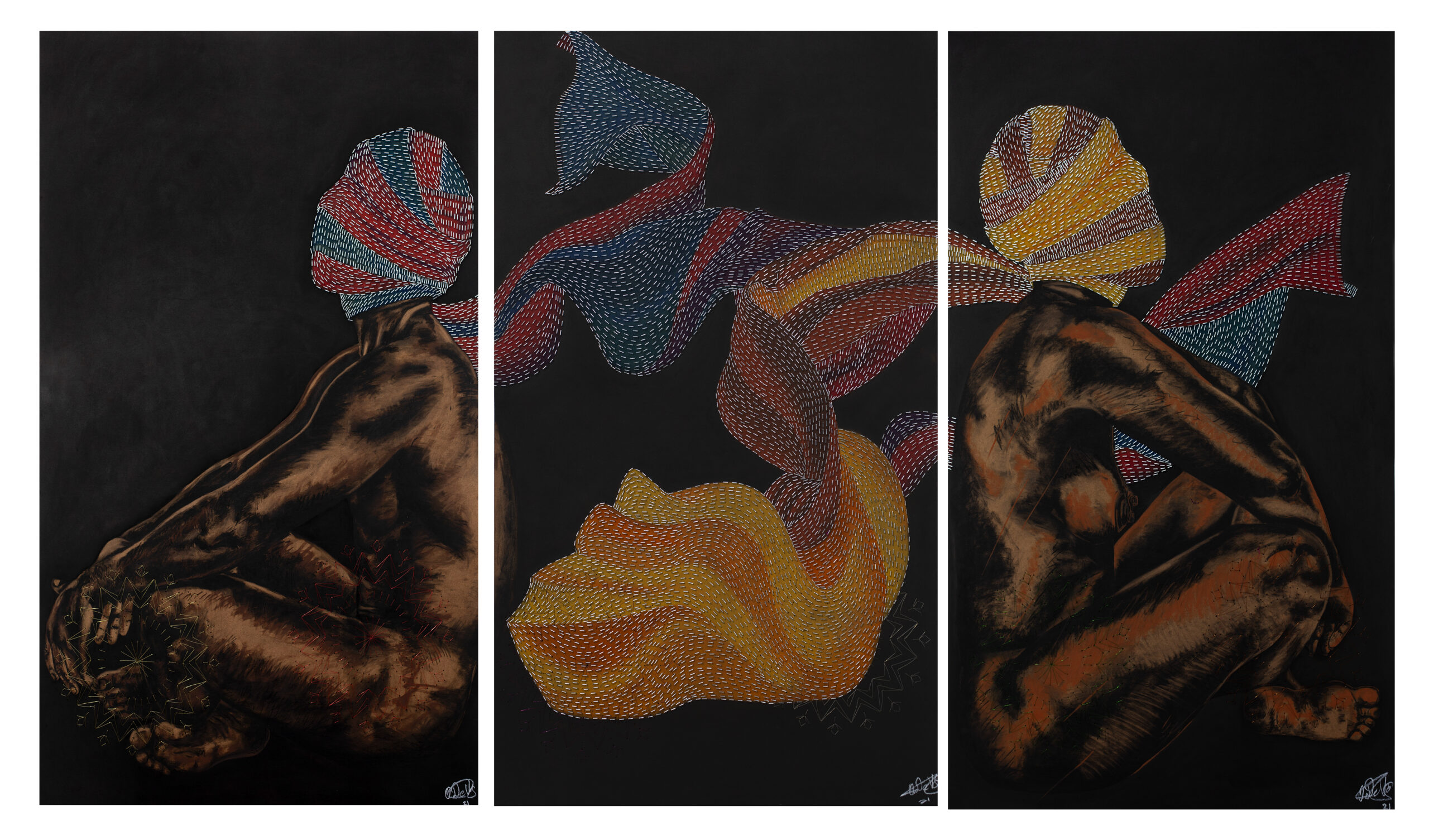
Love in life and death (Triptych)
Pastel, charcoal, staples, copper and blowtorch on board
2021
100 X 150; 90 X 150; 100 X 150 cm
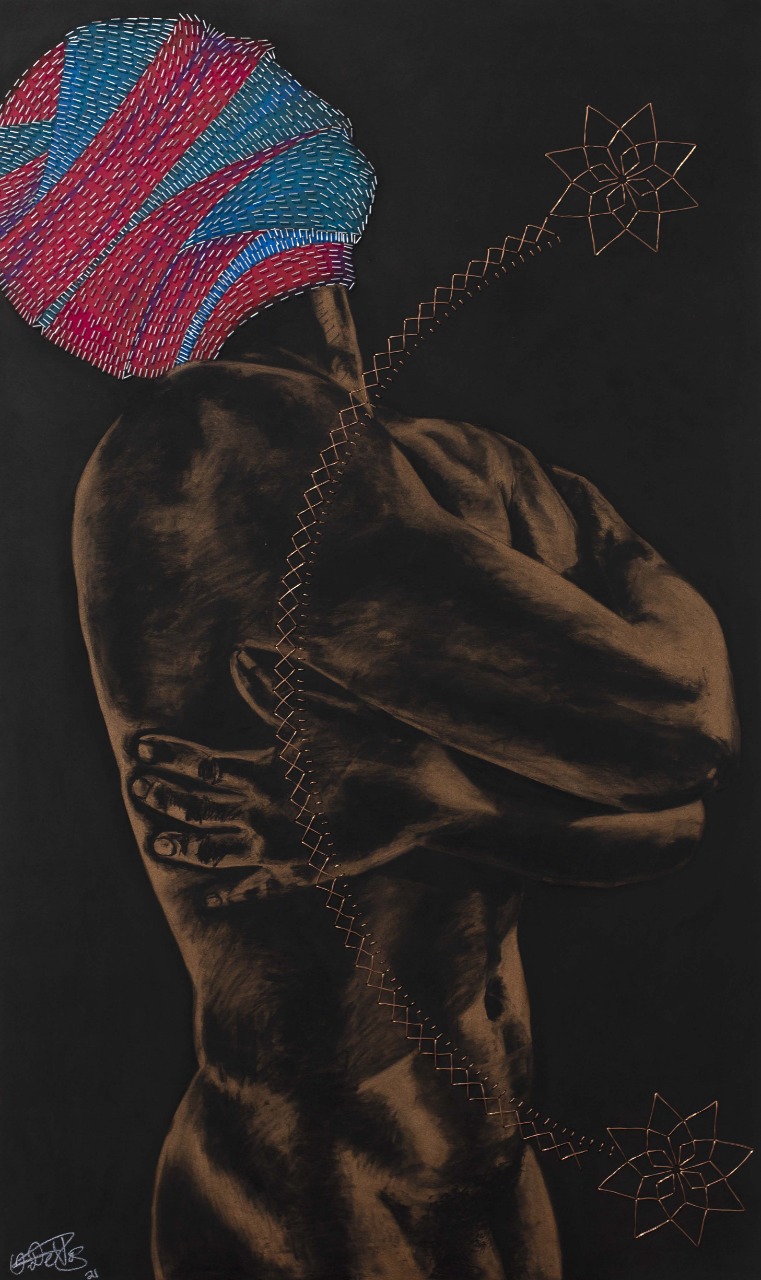
The Absence of Serenity
Pastel, charcoal, staples, copper and blowtorch on board
2021
90 x 150 cm